The classroom was designed for compliance. I’m designing for curiosity.
The classroom was designed for compliance. I’m designing for curiosity.
The classroom was designed for compliance. I’m designing for curiosity.


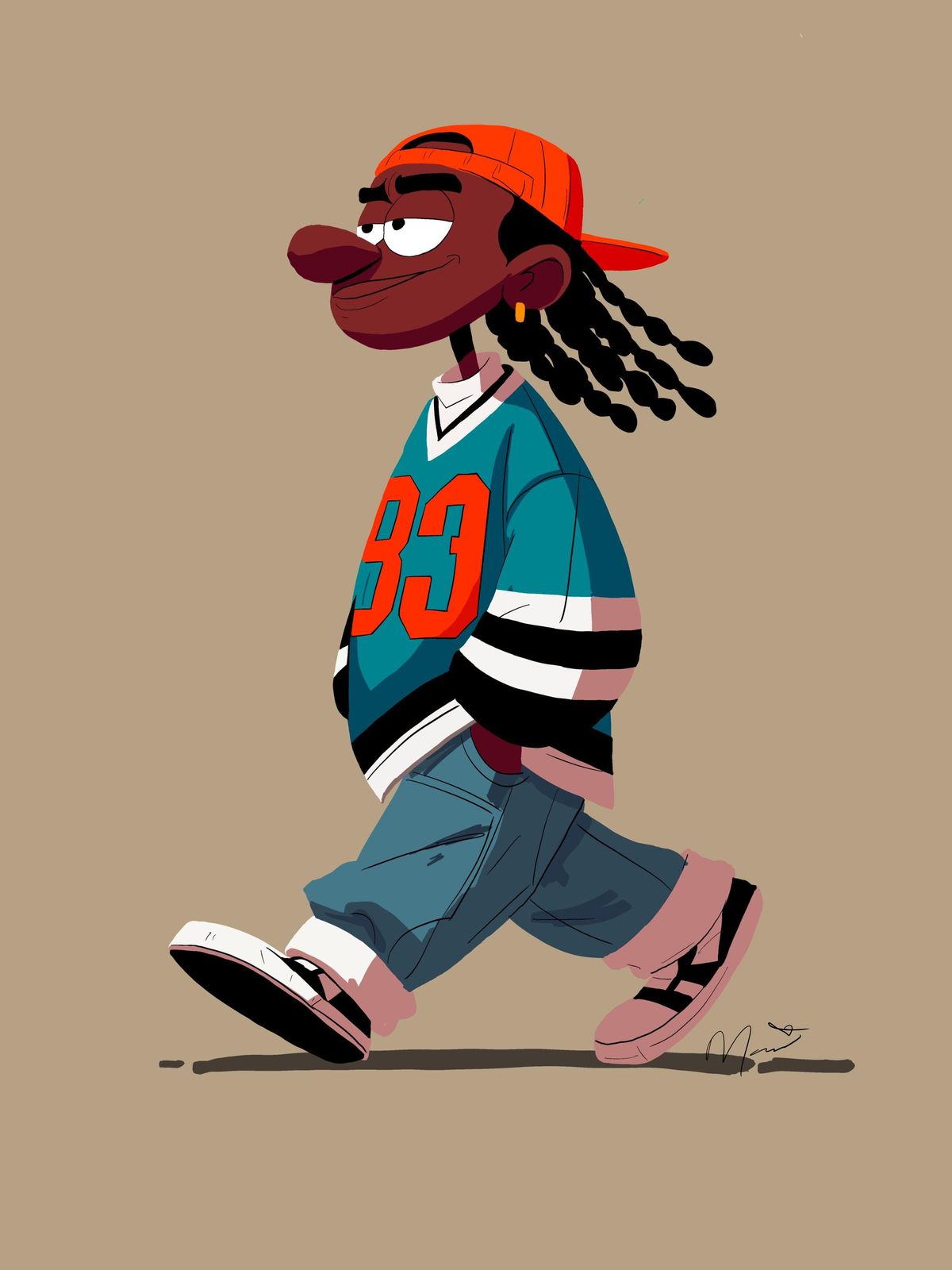

We don't need better students. We need better environments — and this is where we're building them.
We don't need better students. We need better environments — and this is where we're building them.
Learning isn't something you sit through. It's something you live through.
Learning isn't something you sit through. It's something you live through.
Somewhere along the way, we decided that education belongs in a chair, behind a desk, inside four walls. This archive challenges that.
Through primary research with my children and other children, conversations with adult learners, and real-world experiments, I'm building a case for learning environments designed around how people actually process, through movement, creation, social interaction, and play.
The work here isn't theoretical. It's grounded in real interviews, real observations, and real prototypes tested with real people. It's messy, ongoing, and far from finished, which is exactly how learning should feel.
Somewhere along the way, we decided that education belongs in a chair, behind a desk, inside four walls. This archive challenges that.
Through primary research with my children and other children, conversations with adult learners, and real-world experiments, I'm building a case for learning environments designed around how people actually process, through movement, creation, social interaction, and play.
The work here isn't theoretical. It's grounded in real interviews, real observations, and real prototypes tested with real people. It's messy, ongoing, and far from finished, which is exactly how learning should feel.
MARCH 20, 2026 • KINESTHETIC LEARNING IS THE FIRST EXPERIENCE
MARCH 20, 2026
KINESTHETIC LEARNING IS THE FIRST EXPERIENCE
Children understand the world by moving through it.
Children understand the world by moving through it.
Children understand the world by moving through it.
No one teaches a toddler to explore. They reach, grab, fall, climb, taste, throw, and through every one of those actions, they're building a mental model of how the world works. Gravity, texture, distance, cause and effect. The body figures it out before the brain has words for any of it.
This doesn't stop at age five. My third grader told me he shuts down during classroom instruction, puts his head on his desk, and can't retain anything. When asked why, he said "I have nothing to do." Not "I don't understand." Not "it's too hard." He has nothing to do. His body is idle, so his brain checks out.
But ask that same kid to solve a multiplication problem by collecting rocks on a playground or making basketball shots, and he solves it immediately. The math hasn't changed. The environment has.
He's not an exception. He's the norm we keep designing around instead of designing for.
What I'm finding through interviews, observation, and testing:
Children process new concepts faster when their body is involved in the discovery. Sitting and listening is the slowest path to understanding, not because kids can't listen, but because listening without doing gives them nowhere to put the information.
Movement creates memory. When a child physically acts out a concept (grouping objects to understand multiplication, building a bridge to understand weight distribution, navigating an obstacle course to understand sequencing) the experience encodes deeper than verbal instruction alone. They may forget what you told them. They won't forget what they did.
The "attention problem" is often an environment problem. The same child who can't focus for ten minutes at a desk will sustain focus for thirty minutes straight when learning is embedded in physical activity. We keep diagnosing the child. We should be diagnosing the room.
Making is a form of thinking. Children who build, draw, or construct their own versions of a concept demonstrate understanding they can't yet articulate verbally. One child I studied creates his own math quizzes inside a learning game, not because anyone asked him to, but because building the quiz is how he processes the material. Creation isn't a bonus activity after learning. It's the learning itself.
The traditional classroom asks children to do the hardest thing first, sit still, be quiet, absorb, and treats movement as the reward they earn after. The research here suggests it should be the other way around. Let the body discover. Then let the mind name what the body already knows.
Try this with a child in your life:
Next time you're outside with a kid, skip the flashcards. Instead, try embedding a problem into something they're already doing. If they're playing basketball, ask them to make the number of shots that equals 3 times 2. If they're at a playground, ask them to find a group of rocks that equals 4 plus 4. If they're building with blocks, ask them to make a tower that's twice as tall as the one they just built.
Don't explain the math first. Don't teach the concept. Just give them the challenge and watch what they do. You'll likely find that they solve it, and that they want a harder one.
That's kinesthetic learning. The body got there before the lesson ever could.
No one teaches a toddler to explore. They reach, grab, fall, climb, taste, throw, and through every one of those actions, they're building a mental model of how the world works. Gravity, texture, distance, cause and effect. The body figures it out before the brain has words for any of it.
This doesn't stop at age five. My third grader told me he shuts down during classroom instruction, puts his head on his desk, and can't retain anything. When asked why, he said "I have nothing to do." Not "I don't understand." Not "it's too hard." He has nothing to do. His body is idle, so his brain checks out.
But ask that same kid to solve a multiplication problem by collecting rocks on a playground or making basketball shots, and he solves it immediately. The math hasn't changed. The environment has.
He's not an exception. He's the norm we keep designing around instead of designing for.
What I'm finding through interviews, observation, and testing:
Children process new concepts faster when their body is involved in the discovery. Sitting and listening is the slowest path to understanding, not because kids can't listen, but because listening without doing gives them nowhere to put the information.
Movement creates memory. When a child physically acts out a concept (grouping objects to understand multiplication, building a bridge to understand weight distribution, navigating an obstacle course to understand sequencing) the experience encodes deeper than verbal instruction alone. They may forget what you told them. They won't forget what they did.
The "attention problem" is often an environment problem. The same child who can't focus for ten minutes at a desk will sustain focus for thirty minutes straight when learning is embedded in physical activity. We keep diagnosing the child. We should be diagnosing the room.
Making is a form of thinking. Children who build, draw, or construct their own versions of a concept demonstrate understanding they can't yet articulate verbally. One child I studied creates his own math quizzes inside a learning game, not because anyone asked him to, but because building the quiz is how he processes the material. Creation isn't a bonus activity after learning. It's the learning itself.
The traditional classroom asks children to do the hardest thing first, sit still, be quiet, absorb, and treats movement as the reward they earn after. The research here suggests it should be the other way around. Let the body discover. Then let the mind name what the body already knows.
Try this with a child in your life:
Next time you're outside with a kid, skip the flashcards. Instead, try embedding a problem into something they're already doing. If they're playing basketball, ask them to make the number of shots that equals 3 times 2. If they're at a playground, ask them to find a group of rocks that equals 4 plus 4. If they're building with blocks, ask them to make a tower that's twice as tall as the one they just built.
Don't explain the math first. Don't teach the concept. Just give them the challenge and watch what they do. You'll likely find that they solve it, and that they want a harder one.
That's kinesthetic learning. The body got there before the lesson ever could.

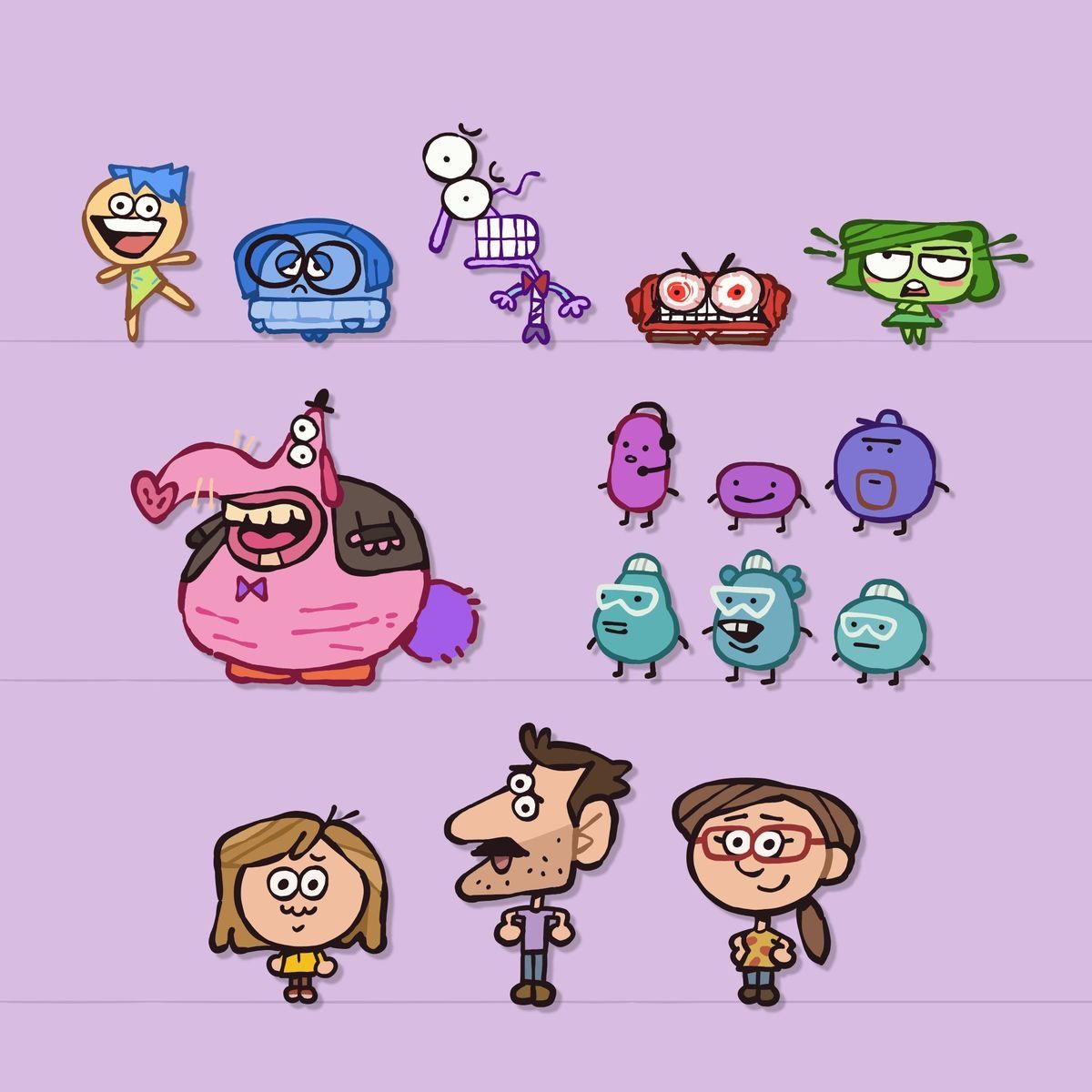


MARCH 23, 2026 • ABSURDITY FACILITATES ENGAGEMENT
MARCH 23, 2026
ABSURDITY FACILITATES ENGAGEMENT
If it's weird enough, they'll pay attention. If they pay attention, they'll learn.
If it's weird enough, they'll pay attention. If they pay attention, they'll learn.
If it's weird enough, they'll pay attention. If they pay attention, they'll learn.
Children's brains are wired to pay attention to the unexpected. Surprise, incongruity, and exaggeration activate the same neural pathways that support memory encoding. When something is funny or weird, kids lean in. When it's predictable and sterile, they tune out. Absurdity hijacks attention in the best possible way — it makes the brain say "wait, what?" and then stick around to find out.
Look at the shows kids choose to watch on their own time. Gumball puts a talking fish in suburban family drama. Adventure Time builds an entire emotional universe out of candy people and stretchy dogs. Chowder turns a cooking apprenticeship into surreal chaos. These shows aren't random — they use absurdity as a delivery mechanism for real narrative complexity, emotional depth, and even moral reasoning. Kids follow along because the weirdness keeps them engaged long enough for the substance to land.
The same principle applies to learning environments:
A word problem about two trains leaving a station teaches math. A word problem about two dinosaurs racing to a taco stand teaches the same math — but the child actually wants to solve it.
A vocabulary worksheet asks kids to memorize definitions. A challenge to write the most ridiculous sentence possible using all five vocabulary words asks them to understand meaning, context, and syntax — while laughing.
A history lesson about trade routes is abstract. A scenario where kids have to barter absurd items ("I'll trade you three magic rocks for your invisible sandwich") teaches the same economic principles through play.
The absurdity isn't decoration. It's the on-ramp. It lowers the emotional barrier to engaging with hard material because the context feels safe, playful, and unpredictable. A child who's afraid of getting a math problem wrong isn't afraid of getting a joke wrong. Once they're inside the problem — laughing, engaged, participating — the cognitive work happens whether they realize it or not.
The instinct in most educational design is to strip humor out. Make it clean. Make it serious. Make it "age-appropriate" in a way that really means "boring enough that no parent complains." But the research keeps pointing in the other direction. Kids gravitate toward the absurd because it mirrors how their brains naturally process — through surprise, pattern-breaking, and play. Fighting that instinct doesn't make learning more rigorous. It just makes it lonelier.
Try this:
Take any concept a child is currently learning in school — multiplication, parts of speech, the water cycle, anything. Now make it ridiculous. Write a word problem where the characters are sentient pizza slices. Create a fill-in-the-blank story where every answer has to be the grossest word they can think of. Ask them to explain photosynthesis as if they're describing it to an alien who has never seen a plant.
Watch what happens to their focus. Watch how quickly they engage. Watch how much they remember afterward.
The silliness isn't the distraction. The seriousness was.
Children's brains are wired to pay attention to the unexpected. Surprise, incongruity, and exaggeration activate the same neural pathways that support memory encoding. When something is funny or weird, kids lean in. When it's predictable and sterile, they tune out. Absurdity hijacks attention in the best possible way — it makes the brain say "wait, what?" and then stick around to find out.
Look at the shows kids choose to watch on their own time. Gumball puts a talking fish in suburban family drama. Adventure Time builds an entire emotional universe out of candy people and stretchy dogs. Chowder turns a cooking apprenticeship into surreal chaos. These shows aren't random — they use absurdity as a delivery mechanism for real narrative complexity, emotional depth, and even moral reasoning. Kids follow along because the weirdness keeps them engaged long enough for the substance to land.
The same principle applies to learning environments:
A word problem about two trains leaving a station teaches math. A word problem about two dinosaurs racing to a taco stand teaches the same math — but the child actually wants to solve it.
A vocabulary worksheet asks kids to memorize definitions. A challenge to write the most ridiculous sentence possible using all five vocabulary words asks them to understand meaning, context, and syntax — while laughing.
A history lesson about trade routes is abstract. A scenario where kids have to barter absurd items ("I'll trade you three magic rocks for your invisible sandwich") teaches the same economic principles through play.
The absurdity isn't decoration. It's the on-ramp. It lowers the emotional barrier to engaging with hard material because the context feels safe, playful, and unpredictable. A child who's afraid of getting a math problem wrong isn't afraid of getting a joke wrong. Once they're inside the problem — laughing, engaged, participating — the cognitive work happens whether they realize it or not.
The instinct in most educational design is to strip humor out. Make it clean. Make it serious. Make it "age-appropriate" in a way that really means "boring enough that no parent complains." But the research keeps pointing in the other direction. Kids gravitate toward the absurd because it mirrors how their brains naturally process — through surprise, pattern-breaking, and play. Fighting that instinct doesn't make learning more rigorous. It just makes it lonelier.
Try this:
Take any concept a child is currently learning in school — multiplication, parts of speech, the water cycle, anything. Now make it ridiculous. Write a word problem where the characters are sentient pizza slices. Create a fill-in-the-blank story where every answer has to be the grossest word they can think of. Ask them to explain photosynthesis as if they're describing it to an alien who has never seen a plant.
Watch what happens to their focus. Watch how quickly they engage. Watch how much they remember afterward.
The silliness isn't the distraction. The seriousness was.