B2B ENTERPRISE
SR. UX RESEARCHER & DESIGNER
Miyya Cody
LOE
90 days
DELIVERABLES
TOOLS
THE PROBLEM
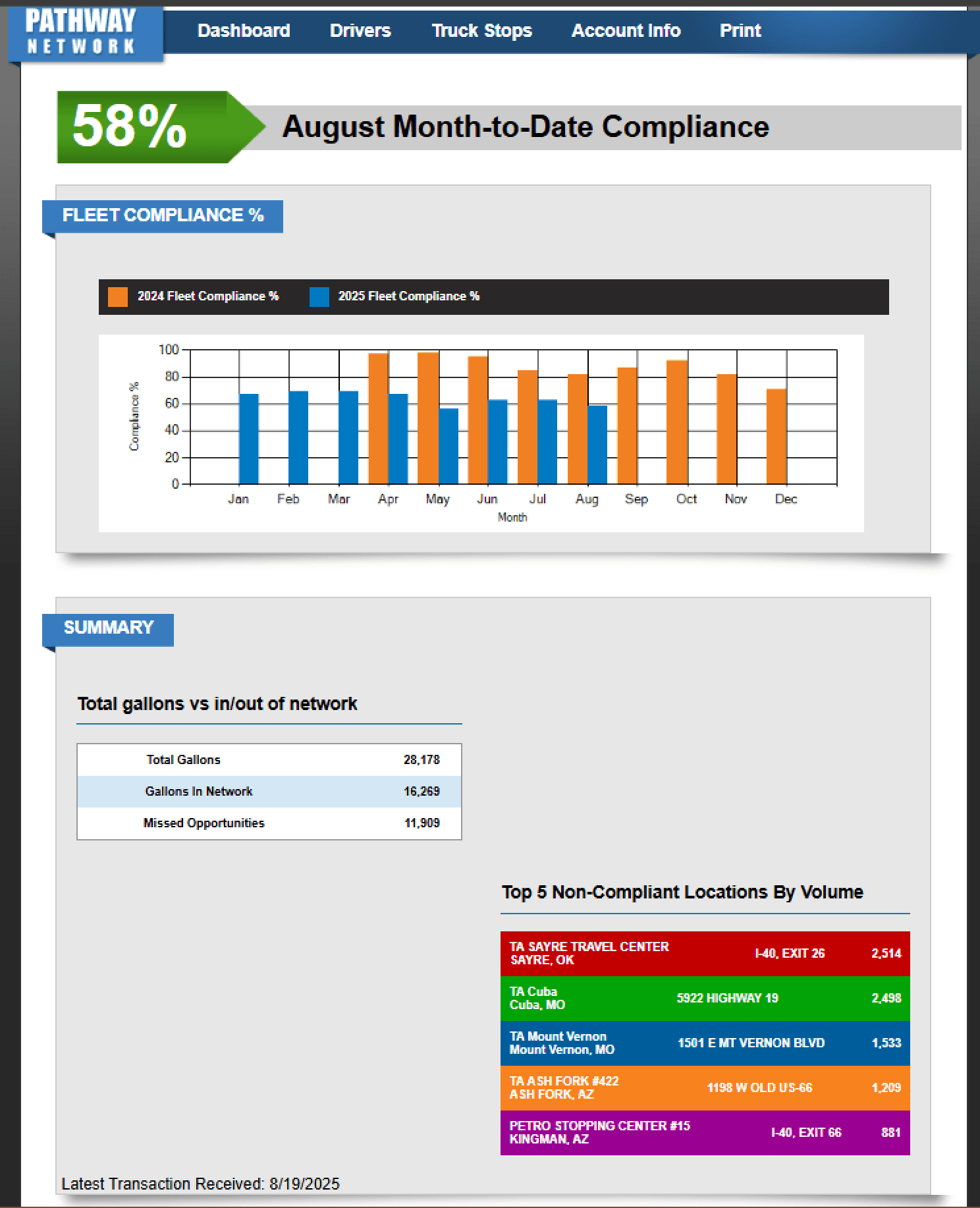
The existing platform was static, text-heavy, and designed around internal business logic rather than user comprehension. Fleet managers — many of whom were not fluent in the financial nomenclature Pilot used internally — were handed dense Business Review Snapshots with no translation layer.
Research and Strategy
Lean Conceptual Inquiry to synthesize prior research and identify data gaps
Competitive UX audit: Motive, Mudflap, and current Pathway
User segmentation with differentiated UX priorities per segment
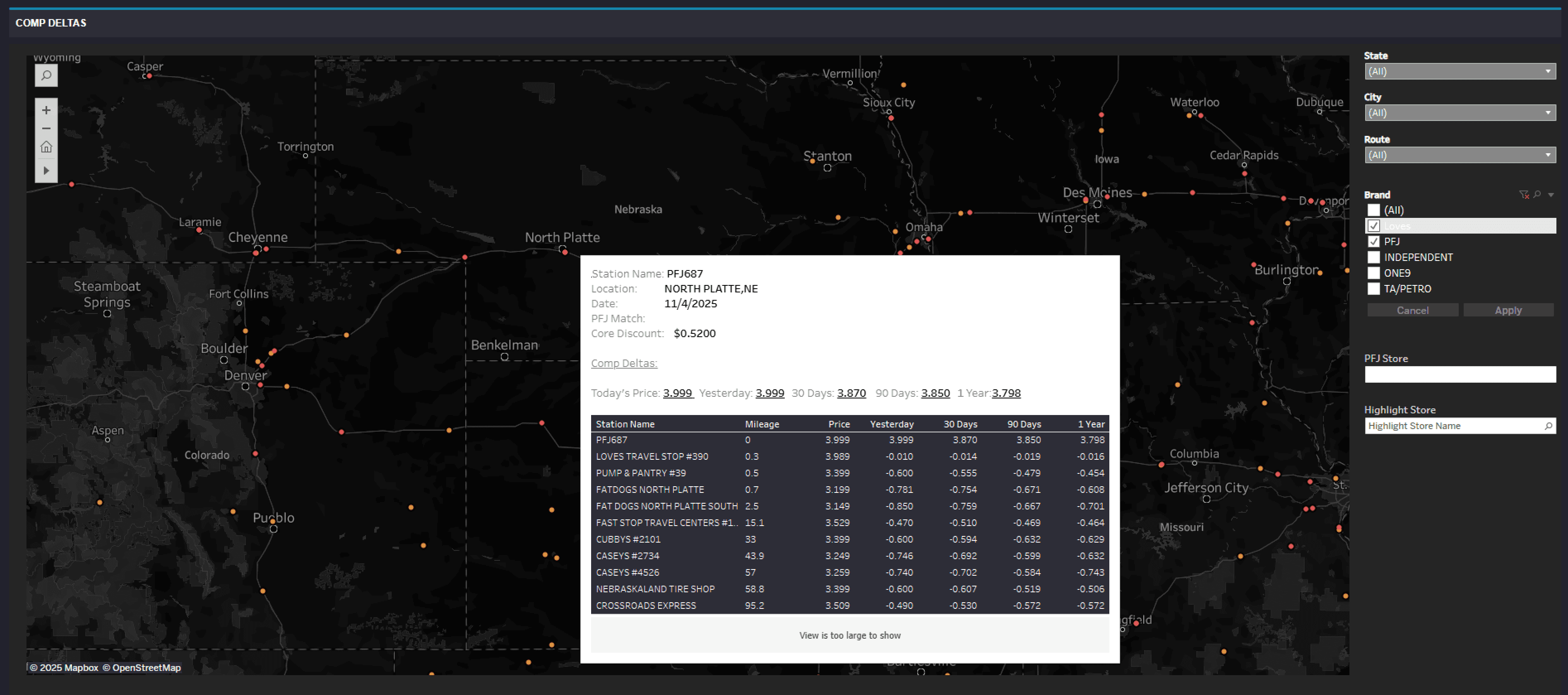
Data ecosystem mapping: FPP, Salesforce, DataBricks, Business Review Snapshot
Discovery with engineering on data availability and Phase I feasibility
Design and Delivery
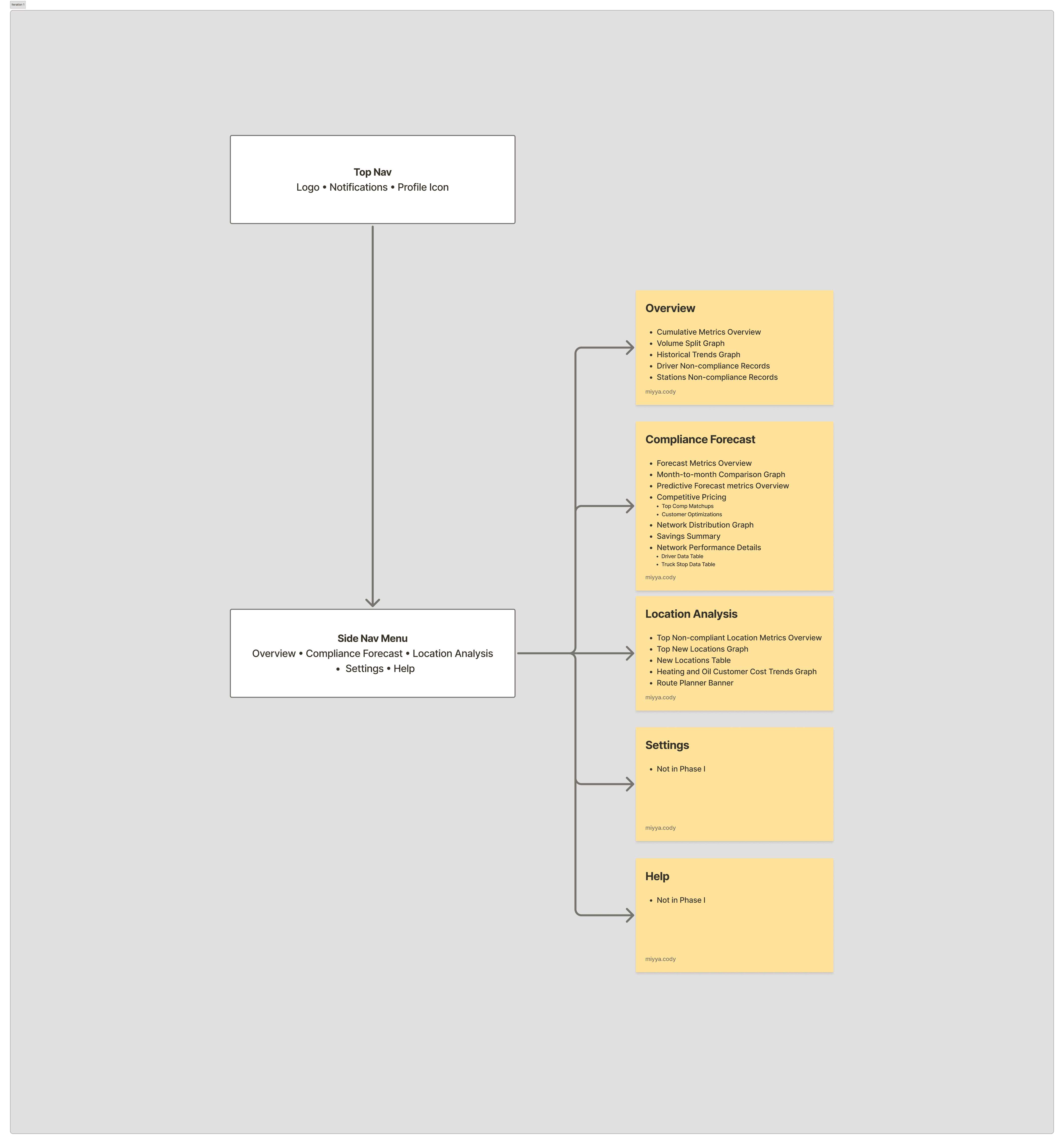
IA restructuring around fleet manager decision-making contexts
Translation of Business Review Snapshot terminology into user-facing language
High-fidelity wireframes and specs in Figma for three core screens
Constraint documentation: what was buildable vs. aspirational in Phase I
LOE alignment with development on technical feasibility
Design Constraints
These constraints were not discovered late — they were surfaced during discovery and encoded directly into the design spec. Each one required a deliberate design response rather than a workaround.
💸
No Dollar Metrics — Volume Substitution Required
DataBricks data quality was insufficient to support accurate dollar-based savings calculations, so all financial framing was replaced with volume metrics: in-network gallons, out-of-network gallons, missed opportunity volume, and compliance rate as a percentage of total stops. A direct tradeoff between business aspiration and data integrity.
💰
No Customer Optimization / Savings Opportunities
Personalizing savings recommendations would have required a funded integration layer connecting DataBricks, FPP, and the Business Review Snapshot that was not scoped for Phase I. This was the most significant user value gap: customers wanted actionable guidance, but the data infrastructure couldn't yet support it.
🖥️
Savings Breakdown Page Removed from Scope
The Savings Breakdown page was removed from Phase I scope because gaps and inconsistencies in the Business Review Snapshot data made it unsafe to display. The final deliverable is three screens: Overview, Compliance Details, and Location Analysis.
DATA TRANSLATION
What the Snapshot Contained
Fuel pricing terminology that assumed a financial background
Compliance data expressed as percentages against internal thresholds, not against user-facing goals
Volume breakdowns across multiple fuel types & networks without clear hierarchy
Business review cadence language not native to how fleet managers think about their operations


DESIGN
OVERVIEW PAGE
COMPLIANCE DETAILS PAGE
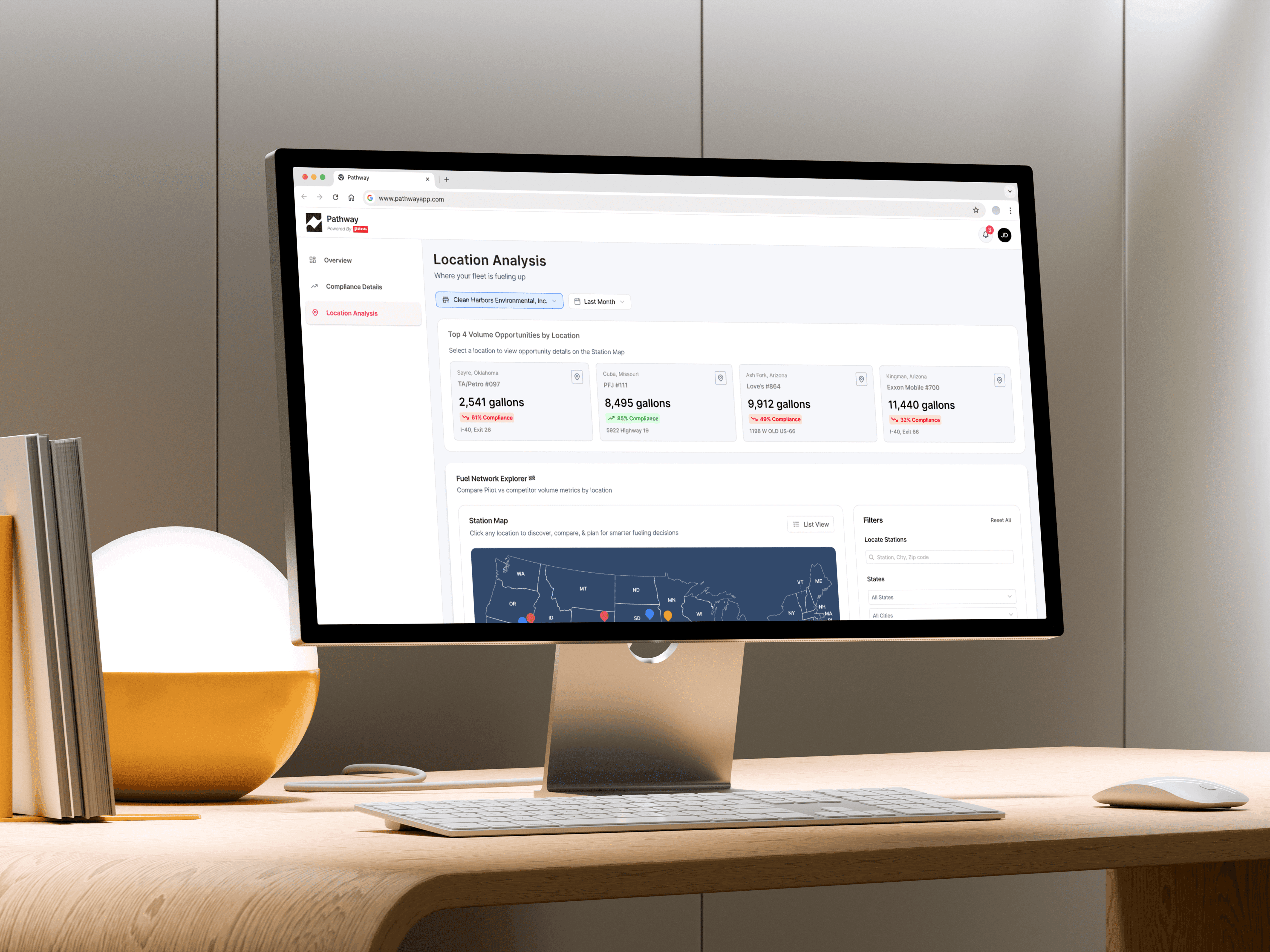
LOCATION ANALYSIS PAGE

OVERVIEW PAGE
76% in-network / 24% out-of-network split as the primary visual — immediately legible without financial literacy.
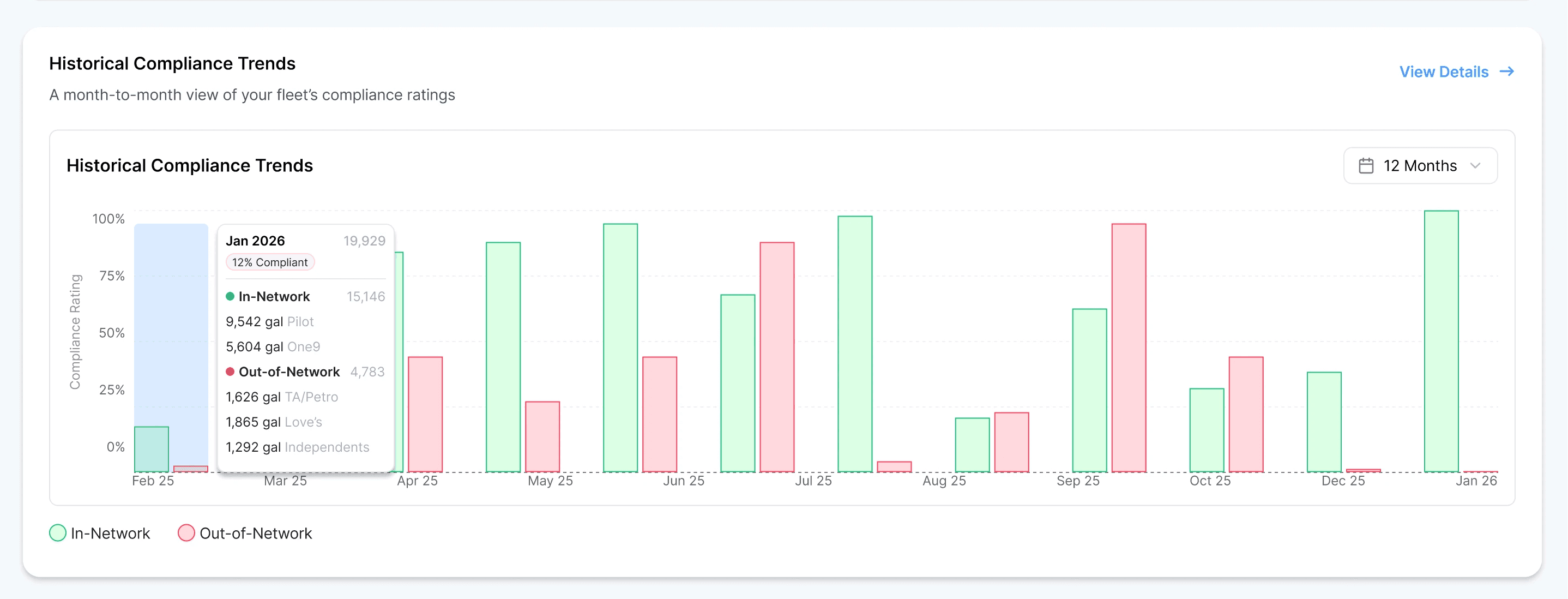
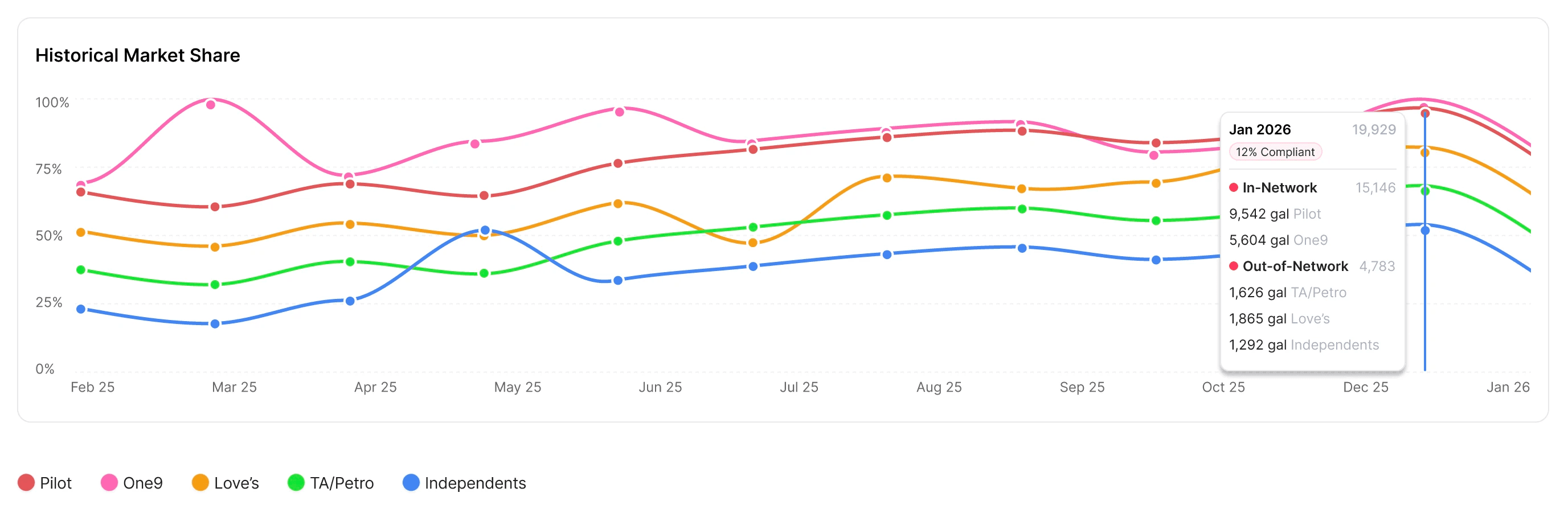
Gallon trend chart replaces dollar savings chart — volume data was reliable; financial estimates were not.
Smart alerts panel surfaces anomalies (volume spikes, compliance dips) as actionable signals rather than raw data.
Non-Compliance Records section provides searchable driver/stop-level detail for fleet managers who need to act on specific incidents.
COMPLIANCE DETAILS PAGE
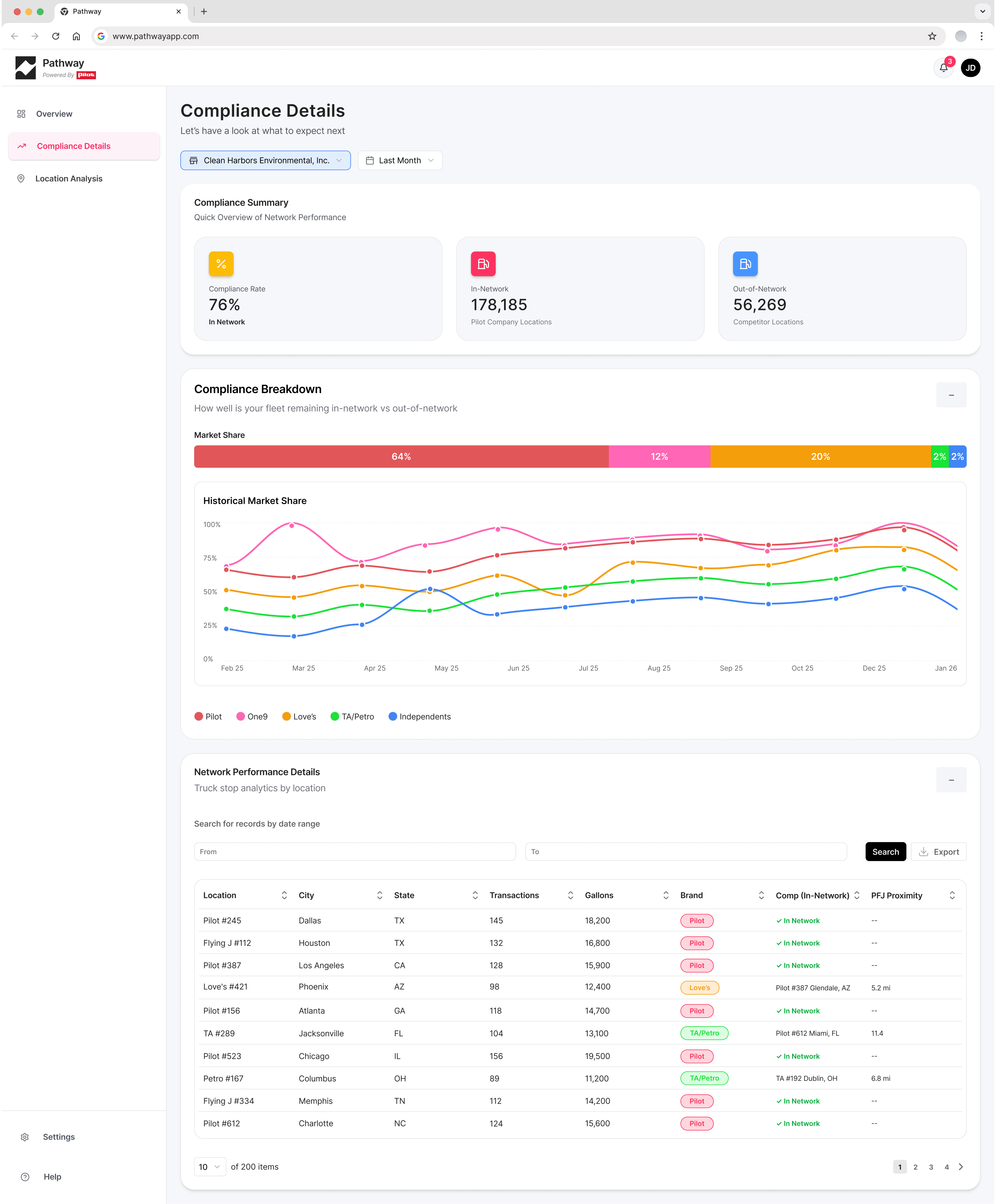
Network Rate (76%), Total Stops, In-Network gallons (7,044), Out-of-Network gallons (2,225) as the four primary KPIs — all volume-based.
Volume Split bar provides the same at-a-glance compliance picture as a dollar savings figure would have, without the data integrity risk.
Heating Oil & Customer Cost Trends section translates the most relevant Business Review Snapshot pricing content into a form fleet managers can contextualize against their own fueling patterns.
Navigation sidebar (Overview / Compliance Details / Location Analysis) establishes the three-screen structure explicitly — no fourth tab placeholder that would suggest the Savings Breakdown page exists.
LOCATION ANALYSIS PAGE
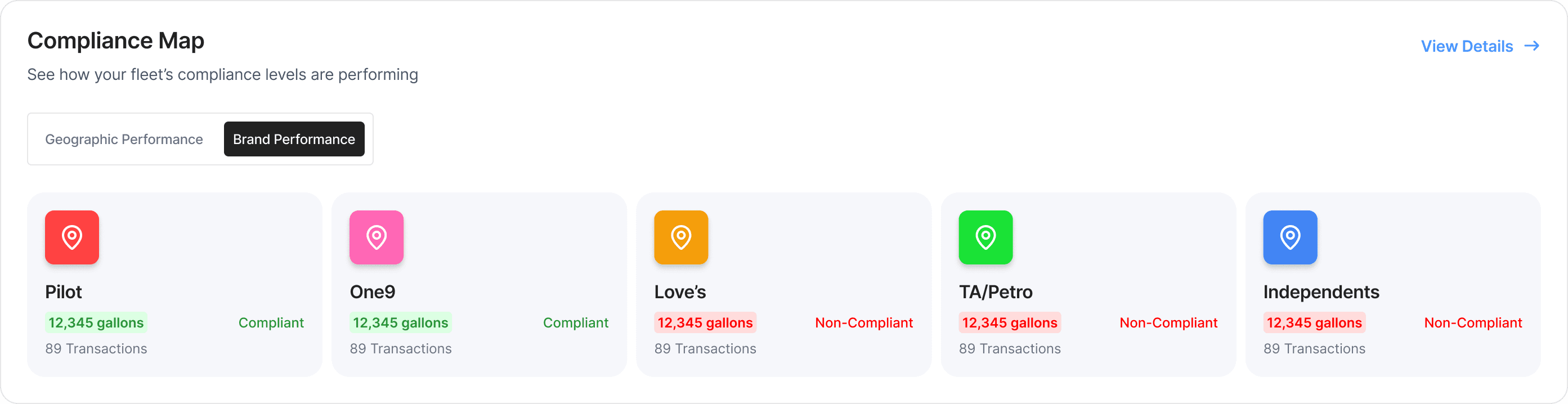
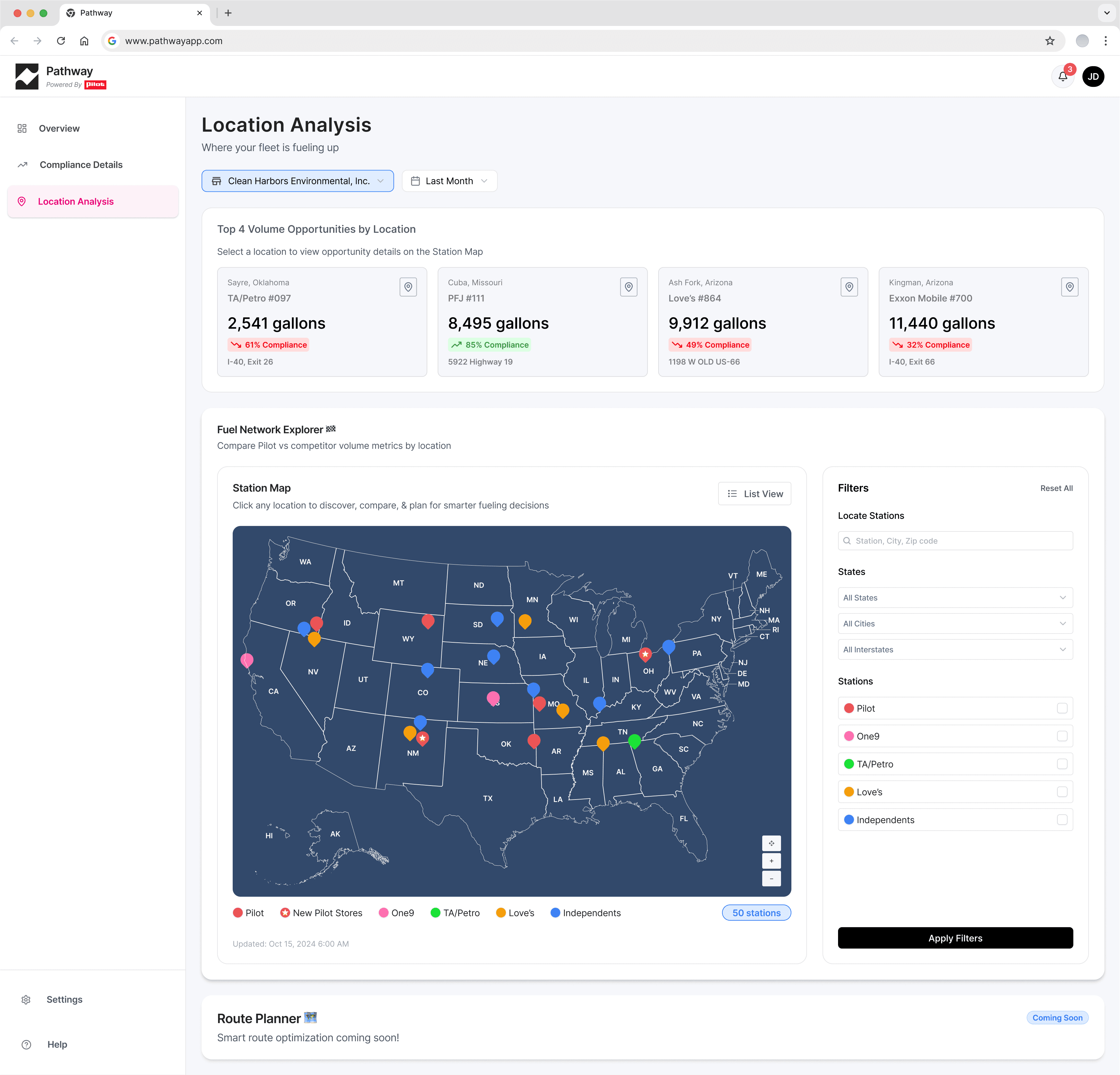
Top 4 non-compliant locations surfaced with gallon volume and competitor stop name — actionable, location-specific, no dollar estimate required.
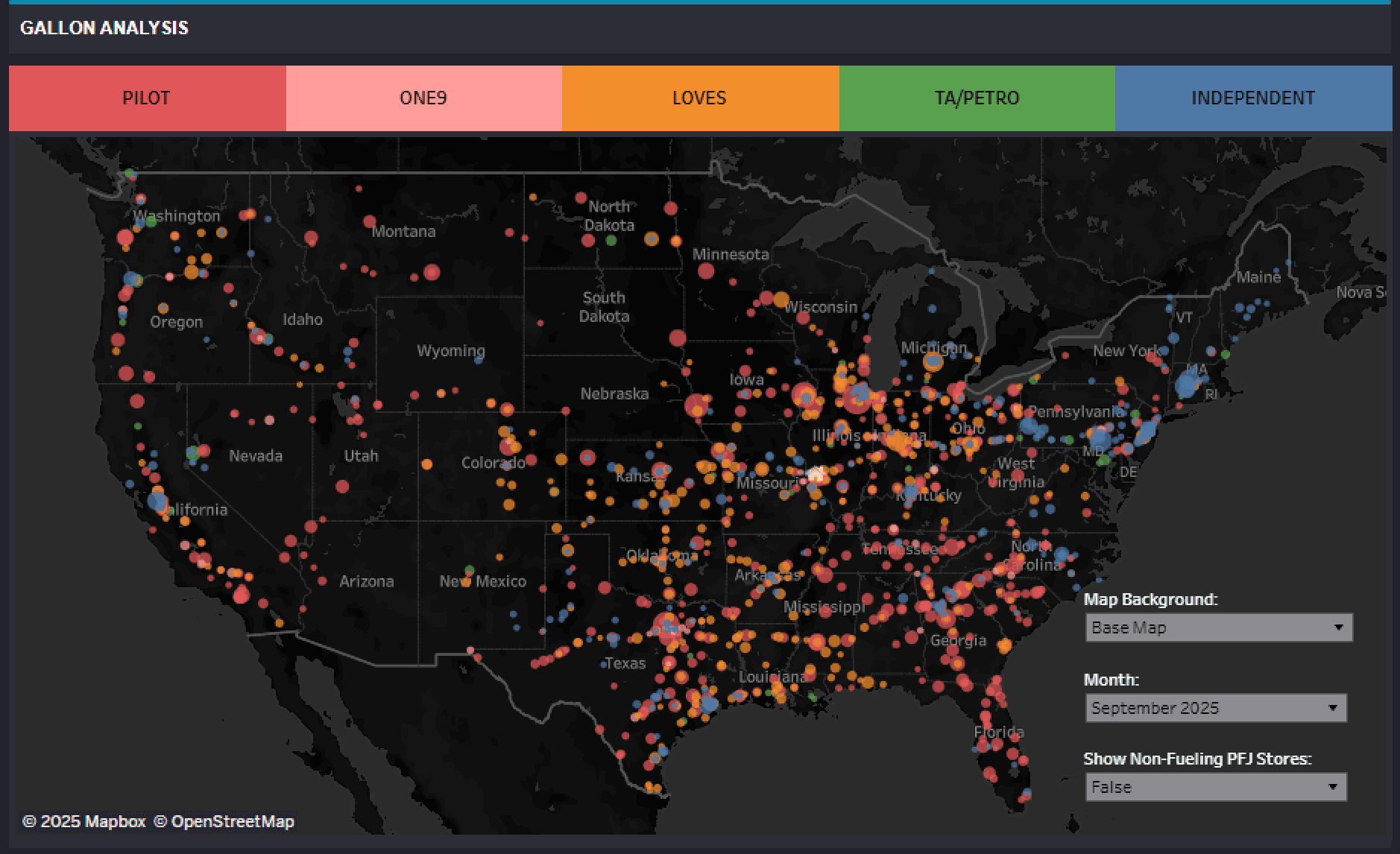
Bar chart: Top 25 new off-network locations ranked by volume, filterable by brand (One9, Love's, TA/Petro, Independent).
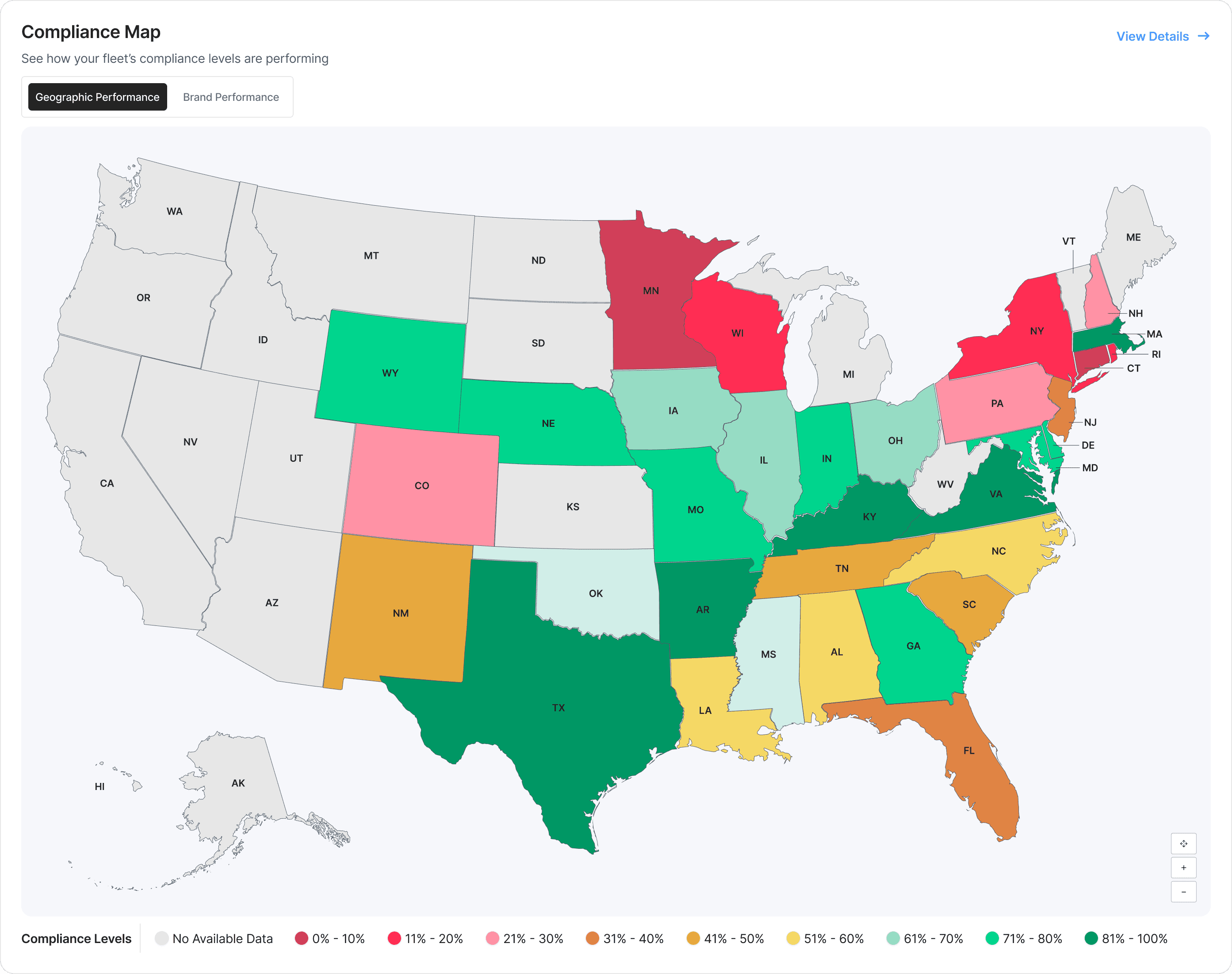
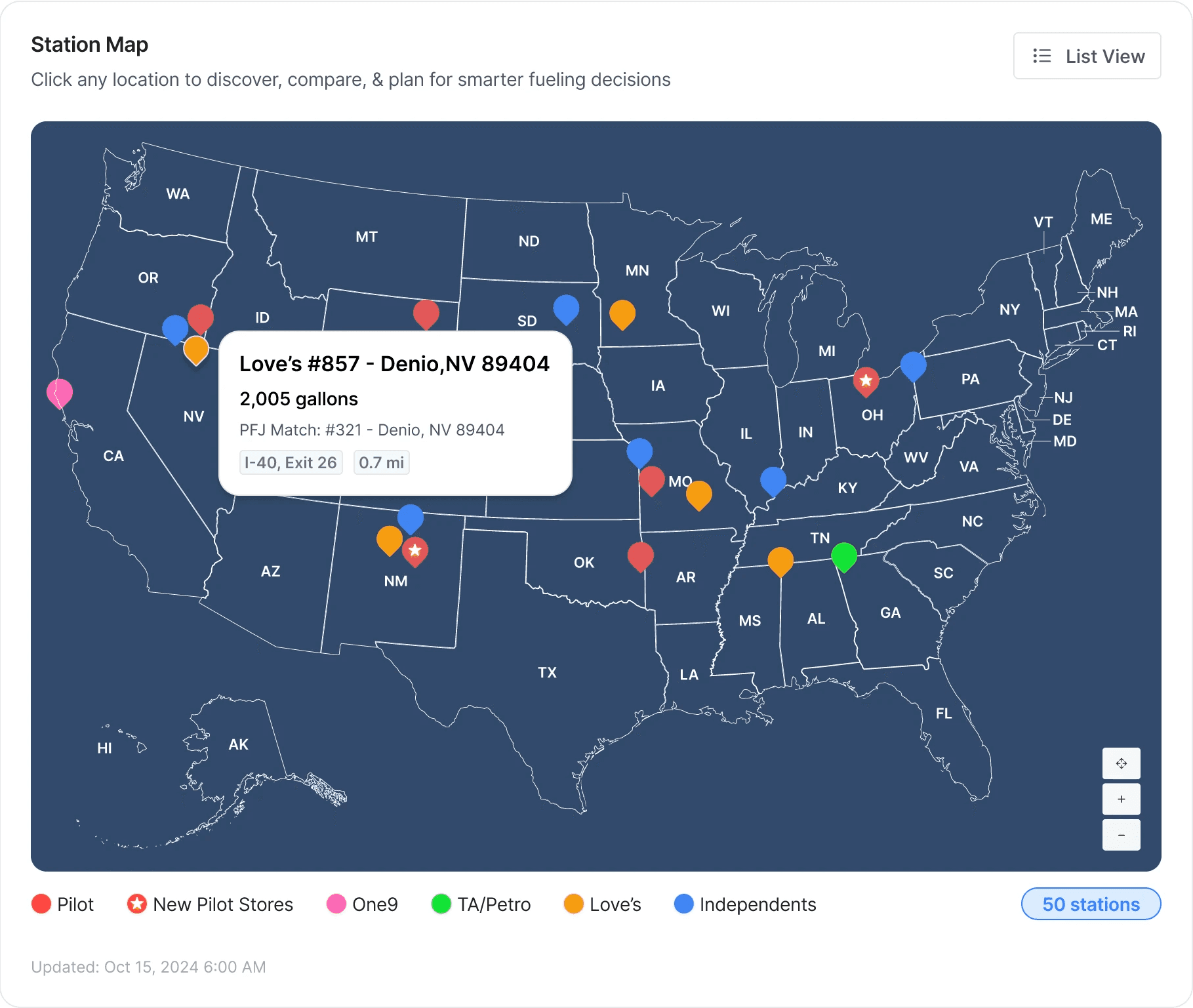
US heat map shows geographic concentration of off-network fueling — gives fleet managers and sales reps a spatial understanding of compliance gaps.
PFJ Locations Used donut (30% top 23 sites vs. 70% all others) surfaces network concentration risk using volume, not estimated savings.


